From Developer to DevRel: 50 Talks Later
Saturday, May 30
15:35 - 16:20
What makes a developer give 50 talks? This is a candid journey from dev to DevRel: the motivation, trade-offs, travel highs and lows, and what DevRel really is. Plus practical advice to beat stage fear and start speaking even if you never planned to.
What motivates someone to go on stage to give a talk once, twice… 50 times? When you are an artist, it is part of the job. But when you are a developer?
In this talk, I will walk you through my journey from developer to DevRel and share both the how and the why. What keeps me going, flying to the next event over and over, sometimes every day. I will talk about the unexpected consequences, good and bad, of constant travel and living out of a suitcase. I will also share what DevRel means to me personally, both as a DevRel and as one of the founding members at a startup, and what it means in general beyond the free travel and conferences.
I will also share my perspective on the mental blockers I often see in people who want to try public speaking but never take the first step, and how to overcome them. So if you have always wanted to get on stage but do not know what to talk about, or maybe never even considered it before, I hope this session will give you a clearer picture of what DevRel really looks like, whether it might be for you, and some practical ways to start speaking even when your mind tries to talk you out of it.
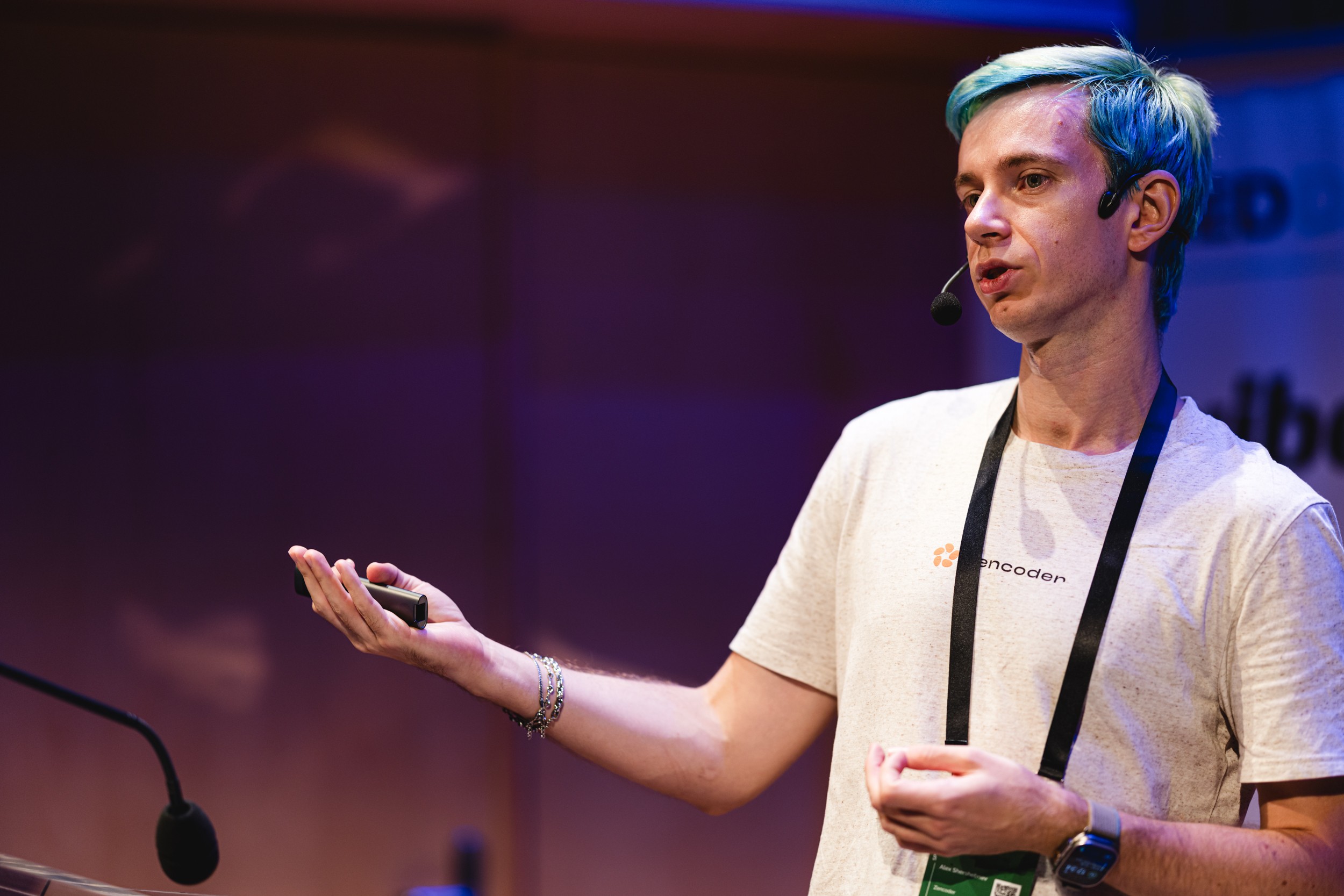
Alex Shershebnev
Alex Shershebnev is a seasoned AI engineer and technology leader with over a decade of experience in AI, DevOps and MLOps. He is currently Lead DevRel at Zencoder, an AI coding assistant, and one of the founding members of the company, where he has spent the last two years shaping both the product and its developer ecosystem. Alex has spoken at more than 50 international conferences, establishing himself as a recognized voice on AI for coding, secure and responsible use of AI in software development, and the future of developer workflows.
At Zencoder, Alex has led ML/DevOps and infrastructure initiatives focused on building scalable, production-grade AI systems. He brings deep expertise in software engineering, cloud infrastructure (GCP, Kubernetes), large-scale GPU platforms, and end-to-end ML/DevOps pipelines that enable data scientists to iterate quickly while reducing operational complexity and cost.