The New Wave of Time Series Foundation Models
Friday, May 29
11:40 - 12:25
Time series just got its own GPT moment. Tools like TimeGPT, Chronos, Moirai and TimesFM forecast from raw data—no feature engineering, no retraining. I’ll explain how they work, why they matter, and show simple Python examples you can run today.
Time series has always required specialized models: ARIMA, Prophet, LSTMs, seasonal feature engineering, and domain-specific pipelines. Today, a new category is changing the landscape — foundation models for time series, trained on millions of real sequences. Tools like TimeGPT, Chronos, Moirai, and TimesFM can generate forecasts or embeddings with minimal setup, sometimes without training at all.
This talk gives a gentle introduction to how these models work and why they’re becoming important. We’ll look at how they represent time (tokenization, context windows, seasonal structure), why they generalize across domains, and what “zero-shot forecasting” actually means. We won’t dive deep into classic forecasting theory — instead we’ll focus on practical usage: querying TimeGPT via API, running Chronos locally, and understanding the differences between TimesFM’s probabilistic approach and Moirai’s long-context design.
If you’ve never touched time series before, you’ll still follow. The goal is to show why these tools exist, where they shine, where they fail, and how Python developers can start experimenting with them today.
Why this topic matters: Time series has always required specialized models and domain knowledge. Tools like TimeGPT, Chronos, TimesFM and Moirai change this by offering pretrained forecasting models that work across many domains with minimal setup.
What a time series foundation model is: A model trained on massive amounts of real time series that can forecast or produce embeddings without retraining. They capture seasonality, trends, noise and regime changes out of the box.
Main tools: TimeGPT → API-first, zero-shot forecast. Chronos → local Hugging Face model using tokenized sequences. TimesFM → Google model with probabilistic forecasts. Moirai → long-context model designed for large histories.
How they work at a high level: Numerical sequences are turned into tokens or embeddings. Attention windows model temporal structure across large horizons. The forecast is “generated,” not fit to a single dataset.
Practical demos: One forecast with TimeGPT API. Local Chronos prediction. TimesFM probabilistic forecast. Moirai for long sequences.
Where they shine vs fail: Great for zero-shot, cross-domain, fast prototyping. Weak on very noisy, extremely domain-specific or tiny datasets.
What it means for Python developers: You don’t need deep forecasting theory to start. You get strong baselines in minutes instead of maintaining many models. These tools will become normal in production pipelines.
- https://pigna90.github.io/talk-time-series-foundation-models/ - Open (pigna90.github.io)
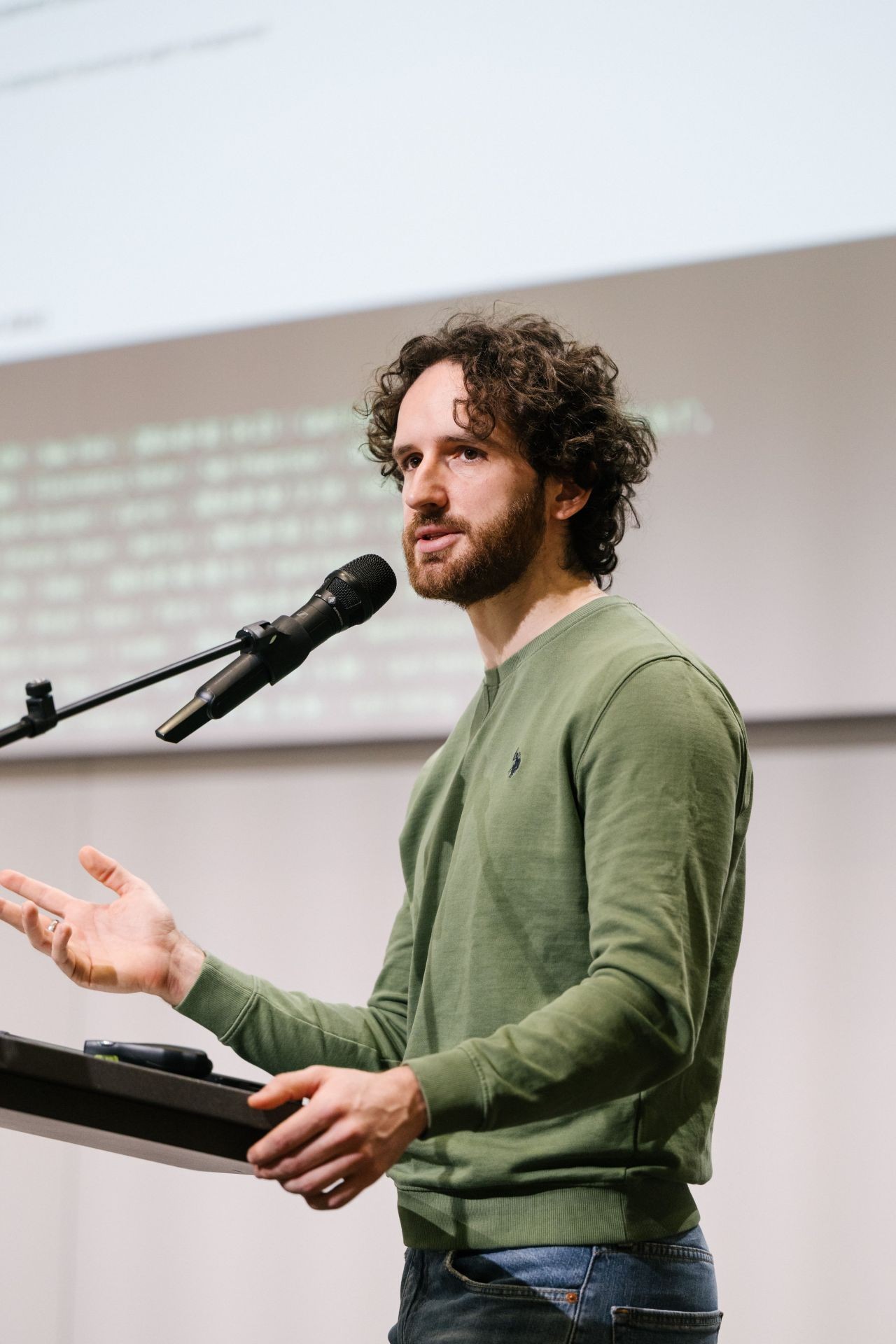
Alessandro Romano
I’m a data scientist with a strong foundation in software engineering and statistics. I work at the intersection of data and business, solving complex problems that don’t always have a clear path — and that’s exactly what I enjoy most.
I focus on creating solutions that matter, always with the goal of bringing real value to the people who use them. Whether it’s building models, writing clean code, or exploring new tools, I like to stay hands-on and close to the problem.
Outside of work, I speak at conferences, teach, and advocate for better data practices. I enjoy sharing what I learn and helping others grow, just as much as I enjoy digging into a tough technical challenge.